


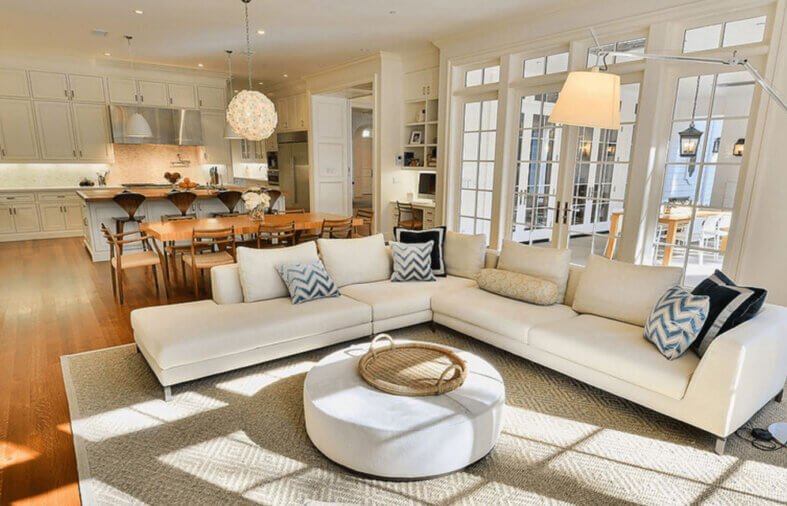
If committing to a single large carpet feels too limiting or you simply don’t have a big budget, you can always opt for hybrid flooring or carpet tiles.
You finally knocked down that wall. The living room, dining area, and kitchen are now one glorious, airy space. But there’s now an empty area in the middle, and it’s got all the charm of an airport departure lounge.
Luckily, the right carpet can do a lot of heavy lifting. It defines zones, adds warmth, and ties the whole space together. The only problem? There are a lot of options, and not all of them will work without your specific layout. So, keep reading to pick the right one.
Bold Geometric Shapes
If you want a carpet that looks modern and hides wear and tear for longer, geometric patterns are the place to start. Chevrons, hexagons, and angular repeat patterns create strong visual boundaries without feeling over the top.
In the UK, geometric designs have become a staple in modern open-plan homes, largely because they read well across large spaces and pair naturally with both neutral and colourful furniture.
For example, you can add a bold chevron carpet between the sofa and dining table to draw the eye and separate the two zones without adding walls or dividers.
Keep the colour palette within the design relatively contained—two or three tones at most. Any more and the pattern will start competing with everything else in the room.
Organic and Abstract Prints
If sharp lines and rigid patterns aren’t your thing, organic and abstract designs offer a softer alternative. Irregular shapes, painterly blotches, and watercolour-style patterns add interest without feeling too structured.
These designs work particularly well beneath dining tables, where a more fluid shape softens the structured look of chairs and table legs.
They’re also a bit more forgiving when it comes to placement. Unlike geometric designs, you don’t have to centre them perfectly for the room to look balanced.
Abstract designs in muted tones, such as dusty terracotta, sage, or warm grey, add character without overpowering the space. So, they let your furniture and other accents stand out naturally.
Striped Designs
Stripes are surprisingly effective in open-plan spaces and often get overlooked. For example, a wide-striped rug placed parallel to a kitchen island or dining bench can create a subtle corridor effect, helping guide movement through the room.
The direction of the stripes also changes how the space feels. Horizontal stripes can make a room appear wider, while vertical ones draw the eye forward and help emphasise length.
In long or narrow open-plan layouts, that small design choice can noticeably influence how the space flows.
Opt for stripes with a low contrast between tones for a sophisticated result. High-contrast black and white stripes can work, but they tend to dominate the room. That can be effective if it’s a deliberate statement, but it’s a risky move if the space already has a lot going on.
Monochromatic and Minimalist Options
If your open-plan space has plenty of different elements, like exposed brickwork and bold cabinets, a monochromatic carpet is exactly what you need to balance out the room.
This doesn’t mean it has to be boring. Texture is everything in minimalist design. A tonal rug with a ribbed weave, loop pile, or subtle sheen can add depth and interest without relying on patterns.
When it comes to colours, soft charcoals, warm oatmeals, and dusty slate tones are particularly versatile. They work across seasons, age well, and give you the freedom to update everything else around them instead of starting from scratch.
Vintage and Persian-Inspired Carpets
Every open-plan space benefits from something that looks like it has a story. Vintage and Persian-inspired rugs bring that sense of character, with their intricate medallion patterns and rich tones that instantly add warmth to the room.
Not sure where to put your vintage carpet? Well, you can always place it beneath your seating area. It’ll pull the eye in, give the space a focal point, and add the kind of warmth that neutral palettes alone can’t achieve.
And don’t worry about the pattern feeling too traditional. In many modern open-plan homes, that contrast is exactly what makes it work.
Pairing a detailed vintage-style rug with contemporary furniture adds depth and personality without making the space feel dated.
Textured Loop and Plush Pile
Sometimes, the highlight of the design isn’t the pattern—it’s the texture. If you’d rather keep things simple visually, textured carpets can still add plenty of interest to your space.
Loop pile rugs are a good example. Instead of relying on prints or bold designs, they create subtle variation through texture, which keeps the floor from looking flat.
They’re also practical in busy open-plan homes because the dense loops handle foot traffic well, hold their shape under furniture, and help soften noise that travels across large spaces.
Looking for a comfortable option? You can’t go wrong with plush pile carpets. Place a thick plush rug beneath your sofa and coffee table, and your seating area will turn into a spot where people naturally want to kick off their shoes and relax.
Just make sure to bring in carpet cleaning services every 6–12 months. Deep cleaning will remove the grime and allergens that your hoover simply can’t reach, and keep the pile looking its best for far longer.
Natural Fibres
Jute, sisal, and seagrass rugs have been having a moment for a while now, and it’s easy to see why. Their natural, woven texture adds warmth and earthiness to open-plan spaces, particularly those with timber flooring or Scandi-inspired interiors.
You’ll usually get the best results placing them in dining or sitting areas that don’t take constant foot traffic.
They’re durable, but not the softest option. Sisal, in particular, can feel a bit rough compared to plush carpets.
And if you’re trying to make more sustainable choices at home, natural fibre rugs are a good place to start. Materials like jute and seagrass are renewable and biodegradable, unlike many synthetic fibres.
Budget-Friendly Alternatives
If committing to a single large carpet feels too limiting or you simply don’t have a big budget, you can always opt for hybrid flooring or carpet tiles.They’re modular, affordable, and far more practical than most people give them credit for.
Because they come in individual squares, you’re free to mix colours or patterns to create your own layout.
Also, if one tile gets stained or damaged, you can just replace that section instead of the entire carpet. In open-plan spaces, that kind of flexibility can be surprisingly useful, especially in the areas closer to the kitchen where spills are more likely.
Conclusion
Somewhere out there is a carpet that was basically made for your open-plan space. And the moment you put it down, everything will finally click.
You now have everything you need to find it. So, close those seventeen browser tabs and go with the one that made you stop scrolling. Nine times out of ten, that’s the right choice.