


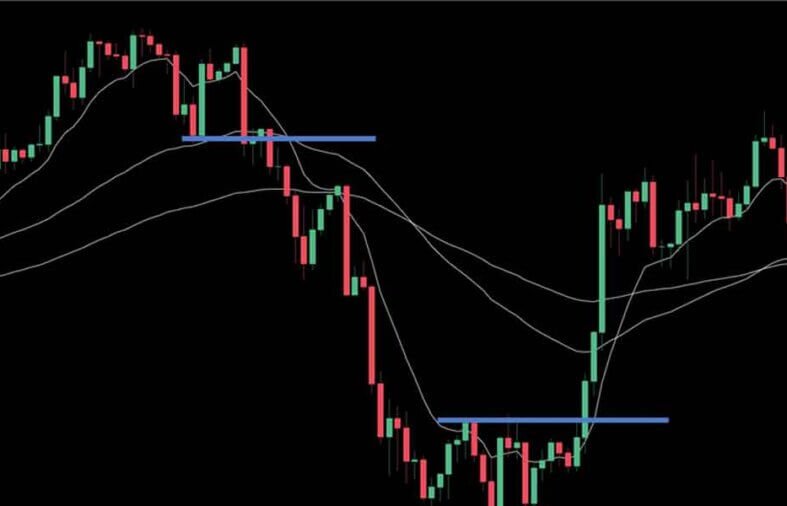
If you’ve spent any time in trading communities online, you’ve probably seen the same chart setups repeated over and over again. Someone posts a screenshot of a moving-average crossover, another trader swears by RSI levels, and suddenly, thousands of people are watching the same signals at the same time.
In today’s markets, especially crypto, technical indicators have become less of a niche trading tool and more of a shared language among retail traders. Accessibility is a huge reason why so many new investors jump into technical analysis.
With modern technology making it easier than ever to buy & sell crypto on the fomo app, traders can instantly pull up charts, apply indicators, and start making decisions within minutes. But what happens when everyone is using the same indicators? The answer is more complicated than most traders realize.
Why Traders Love Indicators in the First Place
Trading indicators are popular because they make chaotic markets feel more manageable. Instead of staring at unpredictable price swings, traders can rely on visual tools designed to spot patterns, trends, and momentum shifts. For beginners, indicators create the comforting feeling that there’s a system behind the madness.
Some of the most widely used indicators include RSI (Relative Strength Index), MACD (Moving Average Convergence Divergence), moving averages, and Bollinger bands. Even if those names sound intimidating, the appeal is simple: indicators appear to turn market behavior into readable signals.
Does a line cross another line? Buy. Does RSI drop below a certain level? Maybe it’s oversold. The rules can feel wonderfully straightforward in a market that’s anything but. Social media has only accelerated this trend. Before long, huge groups of traders are reacting to nearly identical chart setups.
The Herd Mentality Effect
Indicators analyze and influence markets. If enough traders believe a moving average crossover signals a buying opportunity, many of them will buy simultaneously when that crossover appears. That surge in buying pressure can push prices even higher, creating a self-fulfilling prophecy.
In other words, the indicator “works” partly because everyone expects it to work. This herd mentality becomes especially obvious in crypto markets, where traders react quickly and emotionally.
When Popular Indicators Stop Working
Of course, there’s a downside when too many traders crowd into the same strategies. The more predictable a trading setup becomes, the easier it is for the market to adapt, or for more experienced traders to exploit it.
This is why popular indicators can sometimes generate false breakouts or signals. A chart pattern that looks incredibly bullish may trigger thousands of retail buy orders, only for the price to reverse minutes later. Traders call this getting “whipsawed,” and it’s one of the fastest ways to turn confidence into frustration.
Institutional traders and algorithmic bots often make this even more dramatic. Since they know retail traders commonly watch certain RSI levels or moving-average crossovers, they can anticipate those reactions before they occur. In some cases, large players intentionally push prices toward obvious indicator signals simply because they know crowds will react.
Crypto Markets Make This Even More Intense
Crypto trading takes these crowd dynamics and turns the volume all the way up. Unlike traditional stock markets, crypto markets run 24/7, move at lightning speed, and are heavily driven by online sentiment.
One viral tweet or trending TikTok strategy can suddenly send thousands of traders hunting for the same setup. During bull markets, social feeds become packed with self-proclaimed chart experts confidently drawing arrows and circles on graphs like they’ve unlocked the secrets of the universe.
The result is massive waves of traders entering and exiting positions almost simultaneously. Because crypto is so emotionally driven, indicators can sometimes create exaggerated price swings.
A bullish signal triggers buying momentum, influencers start talking about it, fear of missing out kicks in, and prices spike harder than expected. Then the cycle reverses just as quickly once sentiment changes.
So, Are Indicators Useless?
Indicators still provide useful information, and many traders successfully use them every day. The real problem starts when people treat indicators like magical prediction machines instead of tools for managing probability.
Experienced traders rarely rely on a single signal in isolation. They combine indicators with market context, risk management, news, sentiment, and broader trends. More importantly, they stay flexible instead of mindlessly chasing whatever setup is trending online that week.
The Market Knows What You’re Looking At
Trading indicators remain popular for a reason: they help simplify complex markets and provide structure for traders. But when millions of people watch the same signals simultaneously, those indicators can begin shaping market behavior as much as predicting it.
That doesn’t mean technical analysis is broken. It simply means markets evolve, the crowd adapts, algorithms adapt, and successful traders learn to adapt too.
Understanding crowd psychology may be just as important as understanding the charts themselves. Because sometimes the biggest market signal is the fact that everyone else is staring at the same graph.